

Great solo work can stall without a clear, durable way to communicate it. The difference between scattered effort and sustainable momentum often comes down to one thing: treating communication as the operating spine of your business, not an afterthought.
See the hidden job
I used to ship strong work and assume the rest would take care of itself. It didn’t. The inbox grew, leads went cold, and good projects arrived by luck, not design.
Here’s the hard truth: your craft runs on communication. When you’re solo, there’s no buffer. Your ability to explain value, move a conversation forward, and guide delivery is the business.
Digital communication for a solo operator is the set of tools, workflows, and messages that explain your value, move prospects to decisions, and steer delivery, requiring baseline tech skills and structural thinking to design clear, repeatable steps.
Communication isn’t a set of messages; it’s your workflow from first touch to final invoice. The required tech isn’t deep coding; it’s choosing and connecting simple tools on purpose. Structural thinking turns experience into a clear, repeatable story that performs across channels.
Name the real work
When client work ramps up, communication degrades first, follow-ups slip, proposals lag, status updates go fuzzy. That’s not a time issue. It’s a structure issue.
Digital communication is an operating asset; structural thinking is the skill that turns tools into a business you can run solo. If you want to turn experience into a competitive advantage, organize how you talk about it. That means deciding the path a stranger takes to become a client, then writing and wiring the steps so the path feels obvious.
Build digital communication skills
Early on, I thought “be better at email” was the goal. It wasn’t. The real moves were simpler and more durable.
Write one clear value statement that names who you help, what you fix, and the outcome. Keep it short enough to say in one breath. Choose two core touchpoints to master, for many, that’s email and a LinkedIn-first personal branding cadence. Depth beats scatter. Keep a minimal stack: calendar scheduling, a light CRM or contact tracker, a templated proposal doc, and a single project board. Learn enough to connect them.
Tools don’t create clarity; they express it. But once you have clarity, tools turn it into momentum.
A coach uses a short intake form that lands in a contact tracker, triggers a templated “thanks + next steps” email, and books a 20-minute call via a scheduling link. No back-and-forth. Prospect confidence rises before the first conversation.
AI helps outline posts, tighten phrasing, and surface patterns in call notes. You stay in control by deciding the message, the sequence, and what “good” looks like for each step.
Design your communication spine
I kept adding tools to solve chaos. It just made organized chaos. The turn came when I drew the path end to end on one page.
Entry: where people find you and what they see first. Qualification: what you ask to know it’s a fit. Decision: the proposal that frames scope, options, and start date clearly. Delivery: how you set cadence, share progress, and handle change. Renewal and referral: how you close the loop and open the next one.
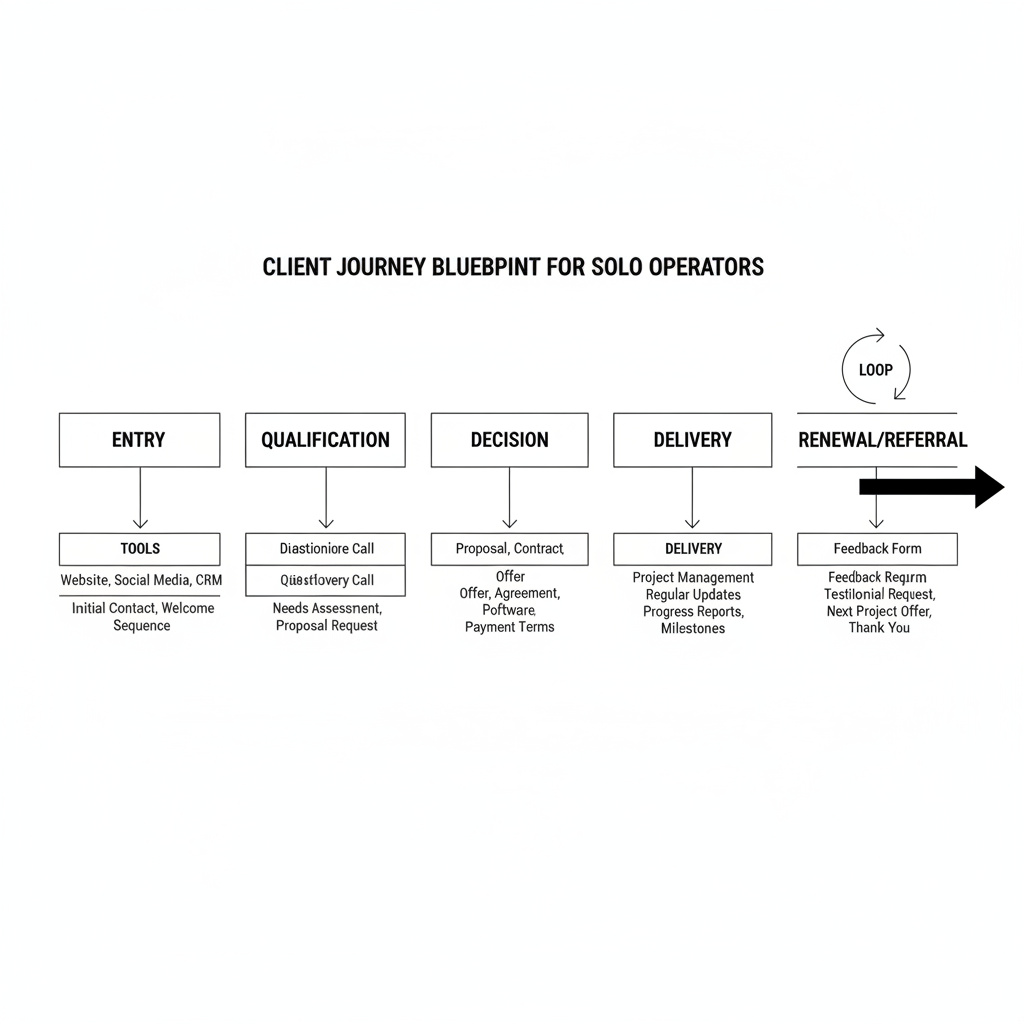
Once you see the path, you can assign each tool a job and each message a purpose. The clutter falls away. Use one doc to list the messages you need: welcome email, discovery call agenda, proposal template, kickoff checklist, weekly update template, wrap note. Write the first draft once; refine in use. That’s structural thinking, fewer moving parts, clearer roles for each.
Prove it in practice
I worked with a solo UX consultant who was drowning in DMs and one-off proposals. We kept her tools, drew the path, and wrote three templates. We added a contact tracker and a scheduling link. Within two weeks, her proposal turnaround dropped from five days to 36 hours, and her first calls doubled because prospects could self-book. Same craft, different posture.
Create a 90-minute “proposal block” twice a week. Use one template with three scope options. Decision-makers don’t need adjectives; they need a clear choice and a start date. Send weekly updates with the same three beats: what we did, what’s next, what we need. Keep it under 150 words. Clients read what’s short and consistent. Keep two to three touchpoints you own. If you publish, do it on a schedule you can sustain. One thoughtful post per week outperforms a bursty month of noise.
A fractional CFO adopted a one-page update and a Friday “needs” line. In the first month, they cut status calls by half and surfaced blockers earlier, saving rework the following week. An independent designer wrote a single “how projects work” page and linked it in proposals. Lead time to kickoff shrank because buyers knew exactly what would happen after “yes.”
Start with one loop
Big overhauls often stall; small loops stick. Pick one path and make it clean. Try this starter approach in the next seven days:
- Update your site or profile headline with a one-breath value line
- Add three required questions to your intake form that flag fit
- Draft one proposal template with three options and a clear start date
- Set a weekly update cadence and write the first template now
Use AI to propose first drafts for each message, then edit until it sounds like you. If you can’t read it out loud without stumbling, it’s not ready. A simple test for clarity: if a stranger can repeat your target audience, the problem you solve, and what happens after “yes” in 20 seconds, your story is clear.
Hold a structural stance
When the calendar gets loud, the temptation is to “just reply faster.” Resist it. Slow down to redesign the path. The speed you want comes from fewer decisions and reusable messages, not from heroic bursts.
Two reflective prompts before you tweak anything: What is the next action I want this person to take, and have I made it easy? What can I reuse here so future me doesn’t face this again?
This is the quiet advantage of solo work: you can change the shape of your business in a week. Start with communication, because it touches everything else. Once the path is clear, the tools you already have get lighter, your message gets sharper, and the right clients recognize themselves without you pushing.